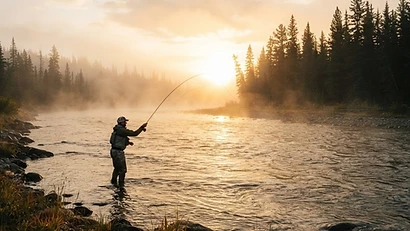
Trout fishing is a privilege, not a right. The fish, the water, and the resource belong to everyone, and it's every angler's responsibility to protect them. Ethical trout fishing is about more than following the law — it's about respecting the fish, the water, and the future of the sport. This guide covers the core principles of trout fishing ethics: catch and release, redd identification, and conservation.
Catch and release is the foundation of modern trout fishing. When done correctly, it allows trout to survive and be caught again. When done incorrectly, it kills fish — sometimes immediately, sometimes days later from stress or injury. The key to effective catch and release is minimizing air exposure, handling time, and stress. Keep the fish in the water as much as possible. Use barbless hooks or pinched barbs to make release easier. Land the fish quickly — a prolonged fight exhausts the fish and reduces its survival chances. Wet your hands before handling the fish, and never touch a fish with dry hands — it removes their protective slime and invites infection.
Redd identification is essential for ethical trout fishing. A redd is a gravel nest that trout dig in shallow riffles during the spawn. It's a clean, bright patch of gravel — often lighter than the surrounding bottom — where the female has turned the rocks to create a nest for her eggs. Redds are typically in shallow water, one to three feet deep, in areas with good flow. When you see a redd, do not wade through it, do not cast to the fish holding over it, and do not fish the water immediately upstream or downstream of it. The eggs in a redd are fragile, and a single step can destroy thousands of them. Learn to identify redds and avoid them.
The spawn is the most vulnerable time in a trout's life. Fish on redds are stressed, exhausted, and focused entirely on reproduction. They're not feeding — they're defending territory and protecting eggs. Fishing for spawning trout is unethical and harmful to the fishery. Even if you release the fish, the stress of being caught can cause it to abandon the redd, leaving the eggs unprotected. When you see spawning activity — fish on redds, clean gravel patches, or trout paired up in shallow riffles — move to different water. There are plenty of fish that aren't spawning that will eat. Target those instead.
Water temperature and catch and release are closely linked. When water temperatures are high — above 65 degrees — trout are already stressed from low oxygen and warm water. Catch and release in warm water can kill trout, even with the best handling. Carry a stream thermometer and check the water temperature before you fish. If the water is above 65 degrees, don't fish for trout — find colder water or fish for a different species. If the water is in the 60 to 65 degree range, fish early in the morning when the water is coolest, and minimize fight time and handling. Ethical fishing means knowing when not to fish.
Handling and release technique matters. When you land a trout, keep it in the water. If you need to take a photo, hold the fish briefly over the water, take the photo quickly, and return the fish immediately. Never hold a trout out of the water for more than a few seconds — air exposure is the single biggest factor in post-release mortality. Support the fish's body — don't hold it by the jaw alone, especially for larger fish, because the weight of the body can dislocate the jaw. When releasing, hold the fish facing upstream in gentle current until it swims away on its own. Don't release a fish that can't hold itself upright — if it rolls over, it needs more time to recover.
Conservation goes beyond individual fish. It's about protecting the water, the habitat, and the resource. Practice leave-no-trace: pack out everything you pack in, don't leave line or leaders on the bank, and respect private property and access rules. Support conservation organizations that protect trout habitat and water quality. Follow regulations — they're based on science and designed to protect the fishery. And mentor new anglers in ethical fishing practices. The future of trout fishing depends on every angler doing their part to protect the resource.
Ethical trout fishing is not about limiting your catch — it's about ensuring that trout populations remain healthy and that the resource is there for future generations. Catch and release done right works. Redd identification and avoidance protects the next generation of fish. Water temperature awareness prevents warm-water mortality. And conservation ensures that the water and habitat remain intact. Fish ethically, respect the resource, and teach others to do the same. That's how we ensure that trout fishing is here for our kids and their kids.